Testing
Pawfly water test kits and CO2 checkers
- 2 models
- 6 options
- $9.99 to $35.99
Testing
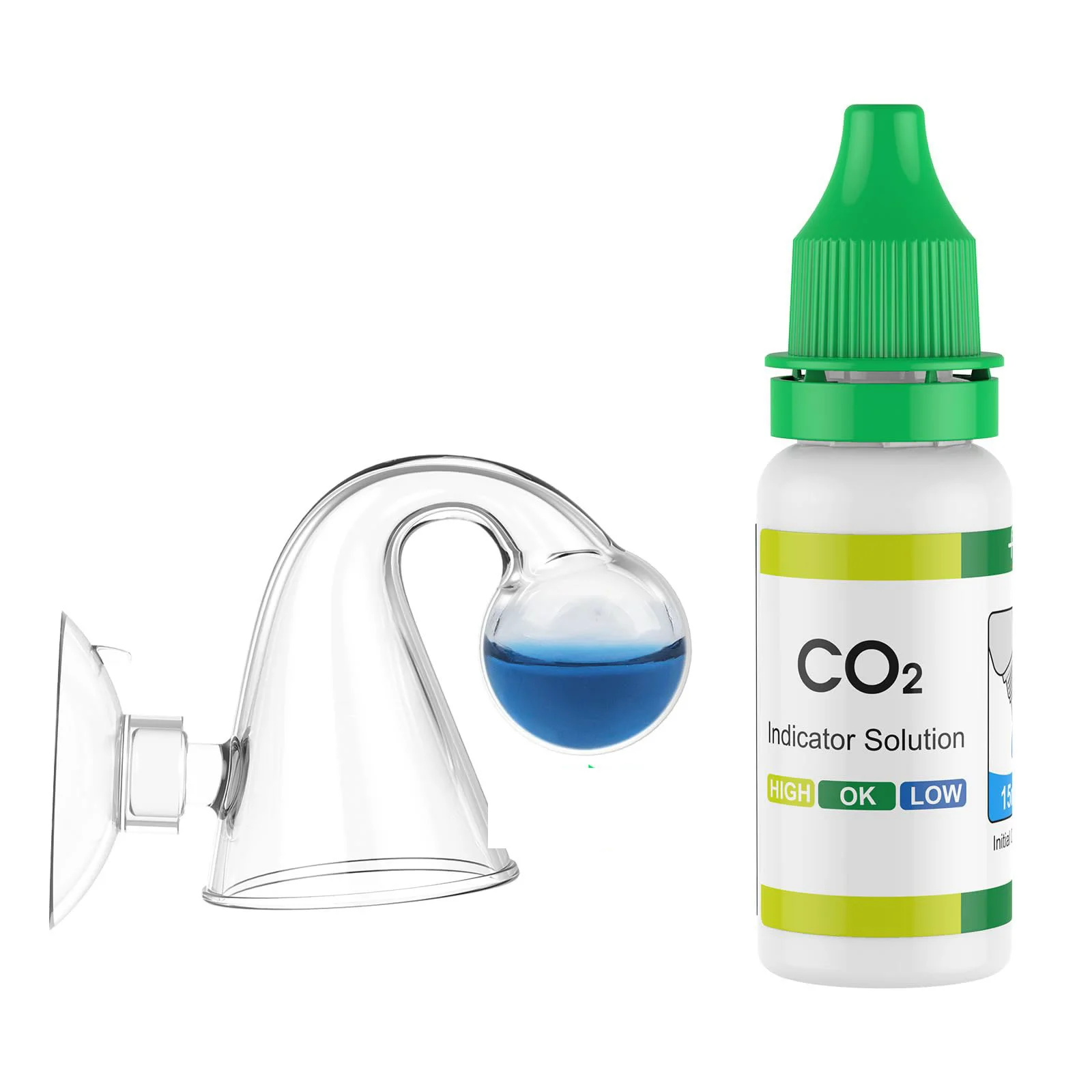
Two ways to read your water: a liquid 5-in-1 kit with 265 tests, and a glass drop checker that shows CO2 by color.
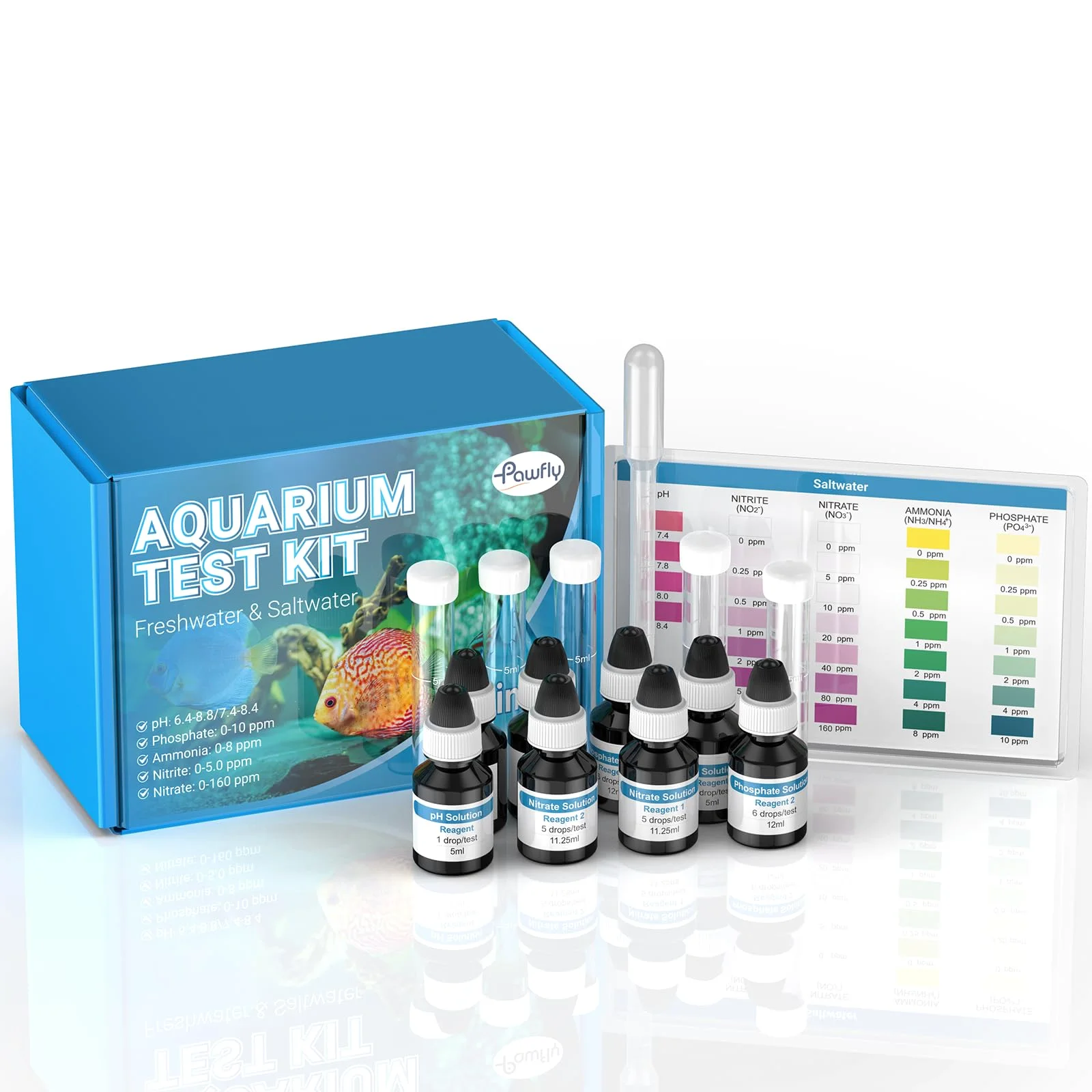
The 5-in-1 Water Master Test Kit reads pH, ammonia, nitrite, nitrate and phosphate with liquid reagents, and you match each tube to a printed color chart. It works in freshwater and saltwater, and it comes as a blue box, a blue standard kit or a black box. During a new tank's first weeks, ammonia and nitrite are the readings to follow as the tank cycles.
A drop checker answers a narrower question: is the CO2 in a planted tank where it should be? Our Glass CO2 Drop Checker is a curved glass tube with a bottle of reagent and 2 suction cups, and it reads by color rather than by number. Take one, or the 2-pack to set one at each end of a long tank.
The 2 water test kits and co2 checkers on this shelf belong to the Pawfly range.
Add 20 drops of reagent, hang the glass upright on the tank wall with the opening facing down, and wait about 2 hours. Green or light green means the CO2 sits in balance, yellow means too much, and blue means too little.
There are 265 in all, split unevenly: 100 for pH, 50 for nitrate, 45 for nitrite, 40 for phosphate and 30 for ammonia. If you test ammonia every day while a new tank cycles, that reagent runs out first, about a month in.
Yes. The kit is made for freshwater and saltwater tanks alike, and the same five readings apply in both: pH, ammonia, nitrite, nitrate and phosphate. Liquid reagents color the sample, and you compare it with the swatches on the printed chart.