


Keeping live bait alive with a Pawfly bait aerator
Minnows in a bucket use up their oxygen faster than still water can replace it. A small battery pump, cool water and a little planning about the end of the day cover most of what a bait bucket needs.
Why a bait bucket runs short of oxygen
Fish take oxygen straight out of the water through their gills. UF/IFAS Extension recommends a dissolved oxygen level of 5 mg/L or more and notes that most species are distressed when it falls to 2 to 4 mg/L, with deaths usually below 2 mg/L. A pond or a lake keeps refilling its oxygen through the surface, wind and waves, and plants. In a bucket the surface is small, there is no wind and no plants, and a crowd of minnows breathes in it.
The extension puts the cause in one line: oxygen runs out when consumption exceeds production. Every extra fish in the bucket adds to the consumption side. An aerator adds to the production side by pushing air through a stone at the bottom, where the bubbles break up and stir the surface on the way out.
Choosing a Pawfly battery pump for your bucket
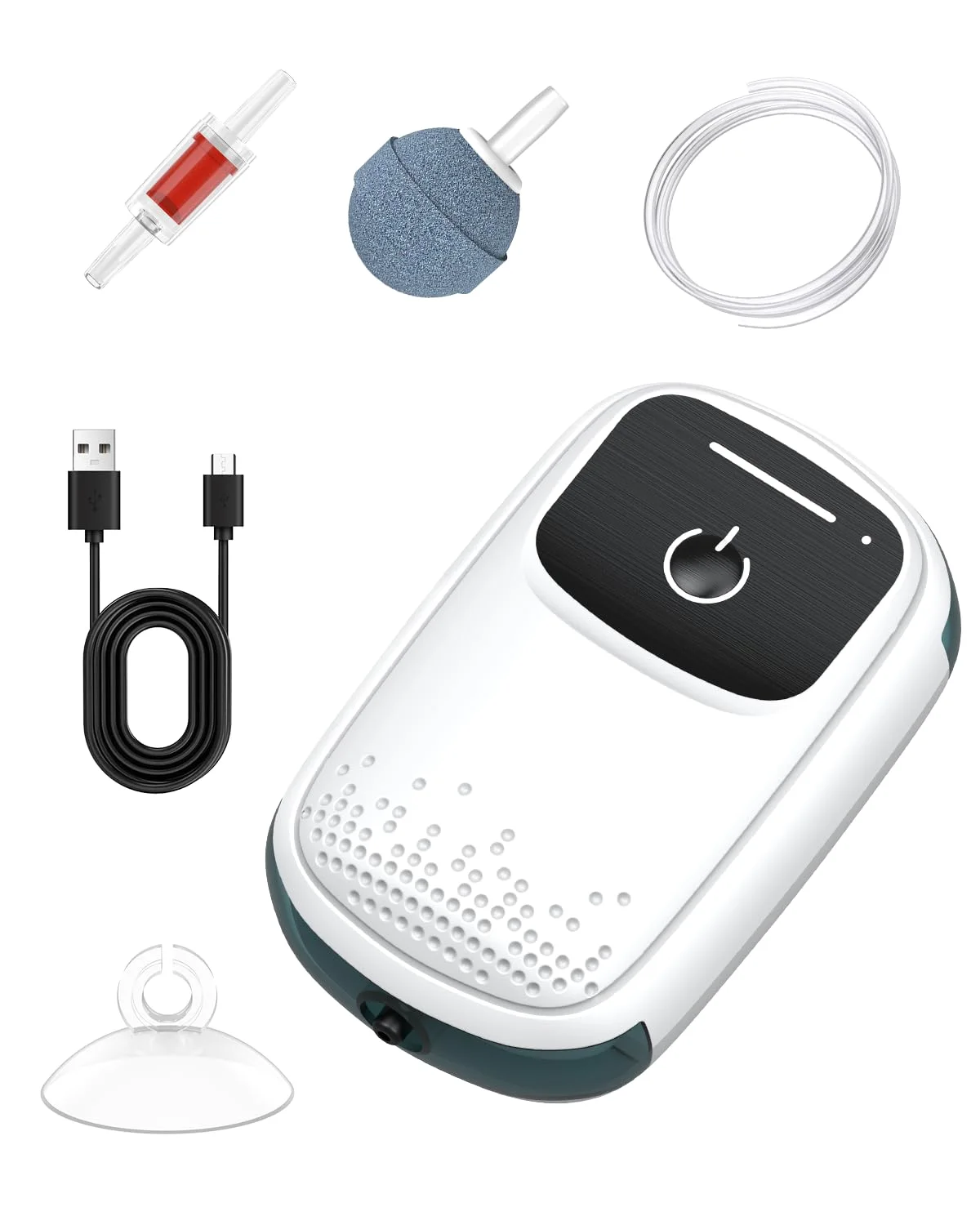
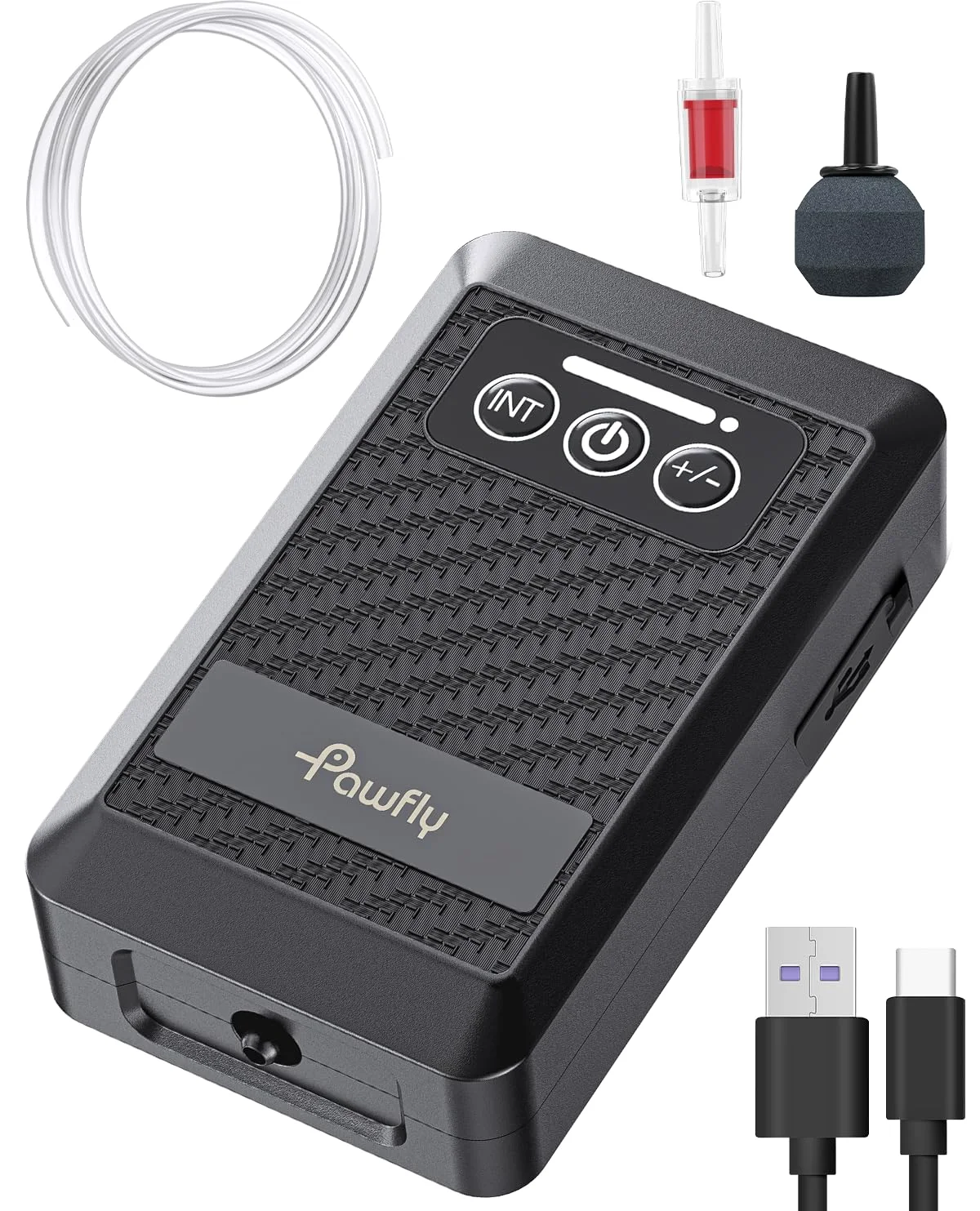
Start with the bucket. Three of our pumps move 25 GPH and are sized for buckets of 5 to 20 gallons: the Pawfly Rechargeable Battery Air Pump, White, the Pawfly Portable Live Bait Pump and the base version of the Pawfly Rechargeable Live Bait Aerator. The live bait aerator also comes in 3 W and 3.5 W versions for 10 to 60 and 60 to 100 gallons. A 60 to 100 gallon version of the white pump is offered as well.
For a large minnow tank or a livewell, the Pawfly Minnow Bucket Aerator moves 64 GPH at 3 W and is sized for buckets up to 65 gallons. It ships with two 5 foot hoses, two air stones and two check valves, so one pump can run two lines. If your bait rides in the cabin or the bed of a truck, the Pawfly Live Bait Cooler with Aerator, 13 Quart puts an insulated box and a pump in one purchase. Its inner space measures 12.8 by 7.3 by 9.4 inches.
Fishing at night or near sleeping campers? Our product data rates the minnow bucket aerator at under 30 dB and the live bait aerator and portable pump at under 35 dB. You will find the bait aerators together on the live-bait aerator shelf, and every battery model, the D-cell pump included, on the Pawfly battery air pump page.
| Aerator | Bucket size | Battery | Runtime: normal / intermittent | Flow |
|---|---|---|---|---|
| Pawfly Rechargeable Live Bait Aerator | 5 to 20 gal (1.5 W). Also 10 to 60 and 60 to 100 gal | 2200 mAh | 24 to 30 h / 30 to 36 h | 25 GPH |
| Pawfly Rechargeable Battery Air Pump, White | 5 to 20 gal. Also 60 to 100 gal | 1800 mAh | up to 26 h / up to 40 h | 25 GPH |
| Pawfly Portable Live Bait Pump | 5 to 20 gal | 2000 mAh | up to 28 h / up to 40 h | 25 GPH |
| Pawfly Minnow Bucket Aerator | up to 65 gal | 2200 or 4400 mAh | up to 60 h / up to 120 h (4400 mAh) | 64 GPH |
| Pawfly Live Bait Cooler with Aerator, 13 Quart | 13 quart cooler | 2200 mAh | up to 36 h continuous | not stated |
| Pawfly D-Battery 40 GPH Portable Air Pump | 5 to 30 gal | 2 D batteries, not included | not stated | 40 GPH |
Reading the runtime on a Pawfly bait aerator
Runtime figures in the table are the ones our product descriptions give, and they come in pairs. Normal mode runs the pump without a break. Intermittent mode runs it for 10 seconds and rests it for 10. That is how the same battery stretches from 26 to 40 hours on the white pump and from 60 to 120 hours on the 4400 mAh minnow bucket aerator.
Flow settings change the picture too. The Pawfly Rechargeable Live Bait Aerator has four flow levels and the white pump has six. A pump turned all the way up drains its battery sooner than one at a middle setting. Treat the upper figure as the best case and plan your day around something shorter.
Four of the pumps charge over USB from a phone charger, a power bank or a laptop: the live bait aerator, the white pump, the portable pump and the minnow bucket aerator. The first and the last of these plug in through a Type-C port. Charge the night before, not on the way to the ramp. The Pawfly D-Battery 40 GPH Portable Air Pump takes a different route: two D batteries that you supply. Our description gives no runtime for it, so carry a spare pair in the tackle box.
Bucket size, cold water and shade
Cold water holds more oxygen than warm water, and the gap is large. UF/IFAS Extension gives the figures: water at 90°F can hold only 7.4 mg/L of dissolved oxygen at saturation, while water at 45°F can hold 11.9 mg/L. Warm water also speeds up the fish, so their demand for oxygen climbs while the supply falls. A bait bucket left in the sun on a summer dock gets hit from both directions at once.
Shade is the cheapest fix you have. Set the bucket under the seat, in the shadow of the boat or the truck, and keep the lid on. An insulated container slows the warm-up even more: the cooler in our range has a thick foam core, and its description states heat and cold retention for over 72 hours. Its removable net basket lifts the bait out in one go for a water change or the next hook.
A bigger bucket helps in the same way. More water means more oxygen in reserve and a slower rise in temperature, so a crowded small bucket is the setup most likely to fail on a hot afternoon.
- Keep the bucket in the shade and the lid closed between baits.
- Give the bait room rather than packing the smallest bucket full.
- Start the aerator before the bait goes in, not when the fish start gulping at the surface.
Setting up the stone and line in a bucket or cooler
Stand the pump on the rim or a dry spot above the water, run the hose to the bottom and let the stone sit flat. The Pawfly Portable Live Bait Pump and the white pump each come with a 5 foot hose, an air stone and a check valve, and the minnow bucket aerator brings two of each. A check valve matters when the pump might end up lower than the water, for example on the deck of a boat beside a tall bucket. It stops water from running back down the hose into the pump.
A stone at the very bottom gives the bubbles the longest climb and stirs the whole column. If the stream looks weak, try a coarser stone from our air stone shelf, since fine pores resist a small pump more. Spare tubing and check valves are on the airline and valve shelf.
When the trip ends: leftover bait stays out of the water
When the trip is over, the easy move is to tip the bucket into the lake. State wildlife agencies ask you not to. Texas Parks and Wildlife calls bait bucket introductions one of the most common ways aquatic invasive species spread. Its advice is plain: do not dump leftover bait in the water at the end of a trip.
In Michigan the rule is written into state law: a person shall not release baitfish in any waters of the state. The state asks that unused baitfish, bought or collected, go on land or in the trash, never in the water. Bait you collect yourself may be used only in the waters where it was collected. Violations carry fines up to $100. Rules differ between states, so read your own state fishing regulations before the season.
- Take leftover bait home for the next trip, give it to another angler, or put it in the trash.
- Never carry bait that has touched one lake's water to another lake to fish with it.
- Clean, drain and dry the bucket and the gear before you fish another water, as Texas Parks and Wildlife advises.
Back home: the same pump on your tank
A bait aerator does not retire between trips. Plugged in, the Pawfly Rechargeable Live Bait Aerator runs on mains power, and when an outage cuts the socket its battery takes over without a touch. That makes it a quiet backup for a home tank on a stormy night. For aquarium pumps sized by gallons and outlets, see our aquarium air pump shelf, and for the quietest models, the Pawfly quiet air pump page.
The figures above come from the Pawfly collection.